
A birth certificate issued in the United States, a diploma earned in Europe, a power of attorney executed in another country or a Salvadoran contract to be used abroad may need to be translated. However, this does not mean they should all be prepared in the same way.
A translator needs to know more than just the language of the document. It also matters where it will be submitted and what procedure it will be used for.
A university may have different requirements from an immigration authority. A document intended for court proceedings may need to be handled differently from one used for a company's internal records. And a Salvadoran document to be used abroad must ultimately meet the requirements of the institution that will receive it in that country.
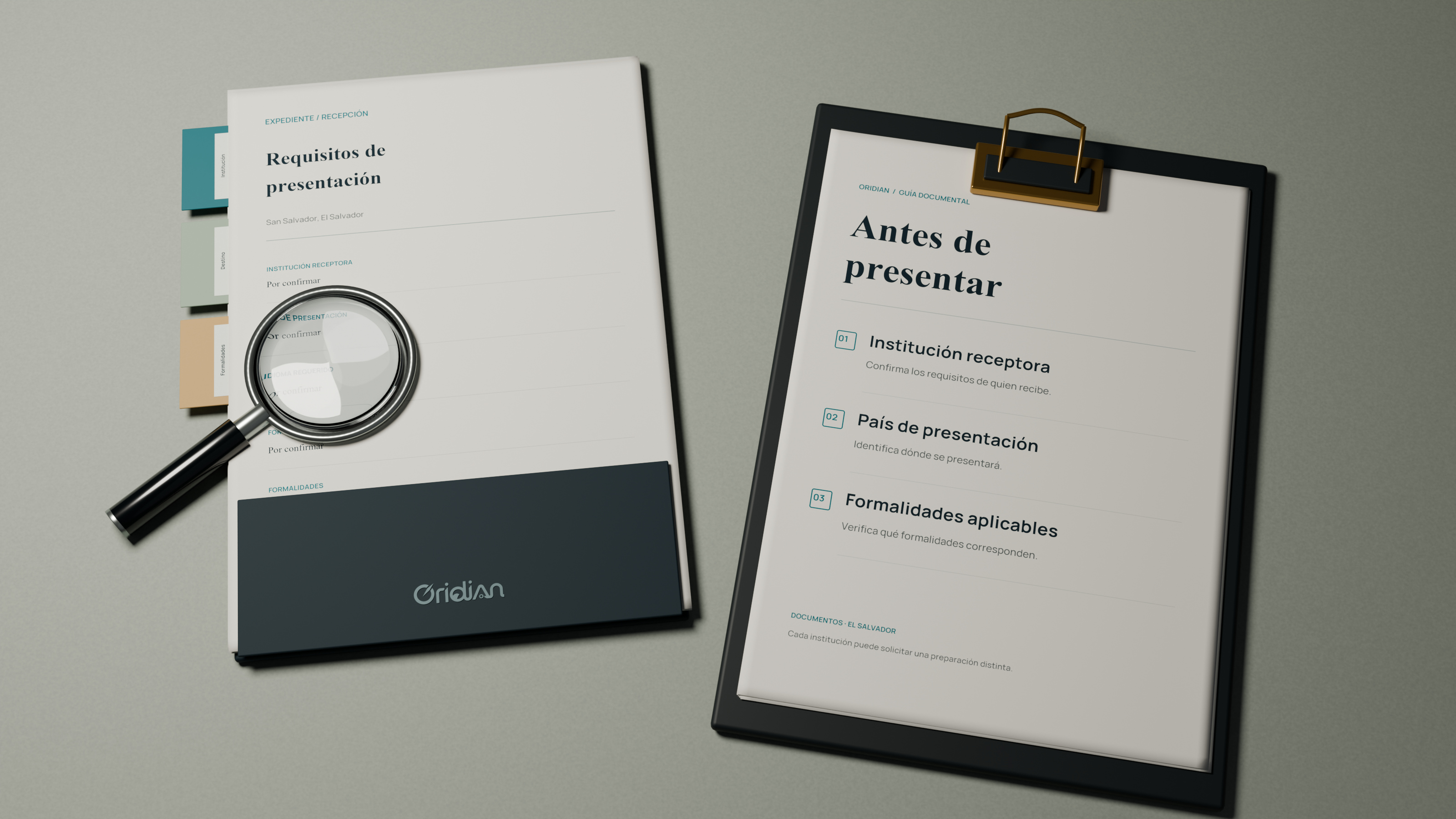
Before requesting a translation, it is therefore helpful to clarify four things: which document needs to be translated, the source and target languages, where it will be submitted and whether the receiving institution has provided specific instructions.
Clarifying these points at the outset helps avoid a situation in which a document is translated accurately but prepared in a format that does not meet the requirements.
Before submitting a translation
- The destination determines the requirements
- The institution, country and type of procedure may determine the formal requirements a translation must meet.
- An apostille is not a translation
- For immigration procedures in El Salvador, documents issued abroad may require an apostille or legalization and, if they are in another language, the corresponding translation formalities.
- Spanish is the language of submission
- The Regulations of the Special Law on Migration and Foreign Nationals provide that documents in a foreign language submitted to the immigration authorities must be translated in full into Spanish, except where the regulations provide otherwise.
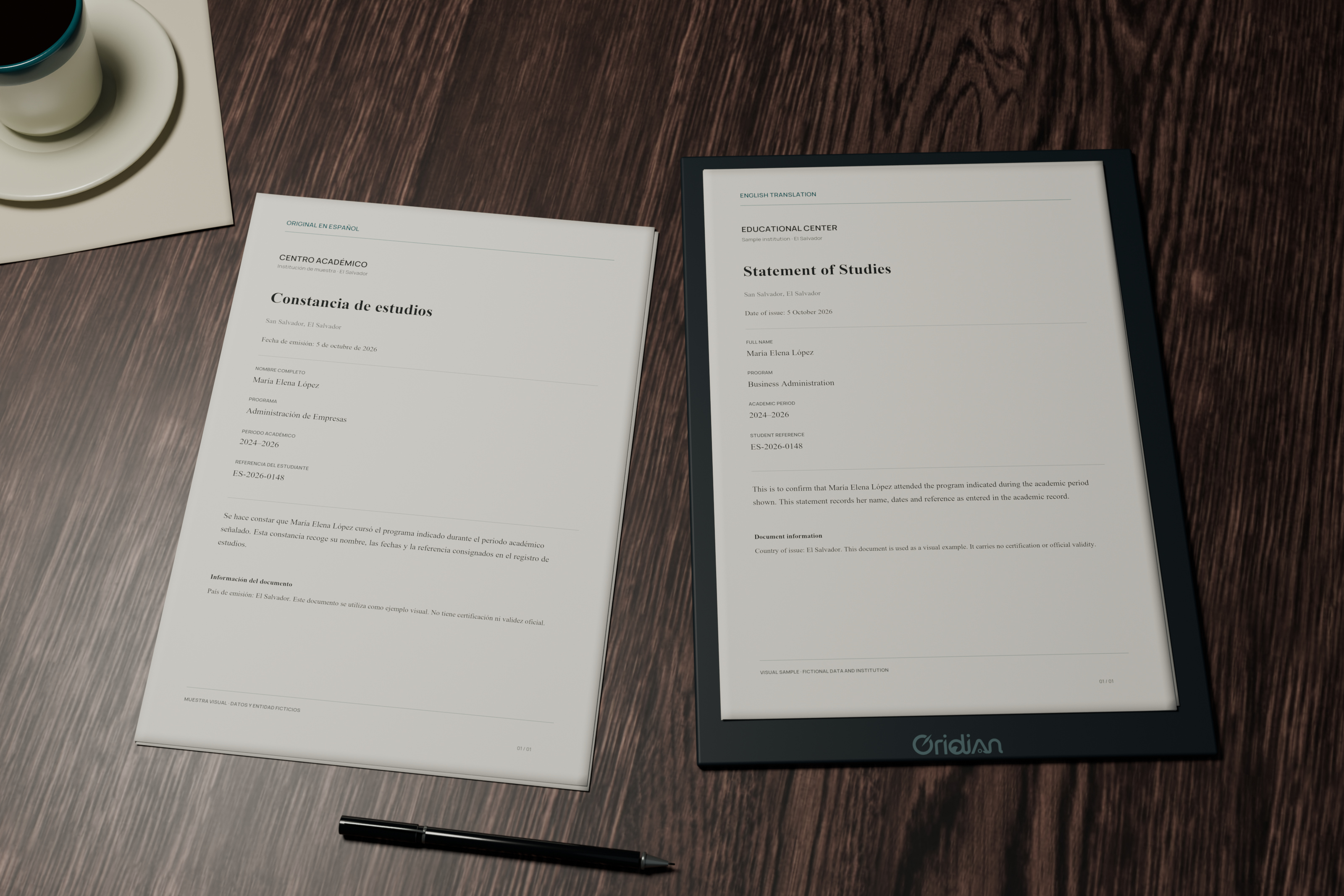
Needs vary from person to person and from institution to institution, but certain documents frequently appear in personal, academic, immigration, legal and business procedures.
These include birth and marriage certificates, background records or certificates, diplomas and academic certificates, employment letters, powers of attorney, contracts, corporate documents, case files, forms and medical documentation.
The reverse also occurs: documents issued in El Salvador may need to be translated to study, work, complete a procedure, conduct business or substantiate information before an institution in another country.
In both cases, the starting point should be the same: identify who will receive the document.
Foreign documents may be subject to additional requirements before they are accepted by a Salvadoran institution.
This is especially important in formal procedures. In immigration matters, for example, Salvadoran regulations set out legalization or apostille requirements for certain documents issued abroad and specify formalities for documents submitted in languages other than Spanish.
This means that translation, apostille and legalization should not be confused.
Translation makes the content of a document understandable in another language. An apostille or legalization relates to the authenticity and recognition of a foreign document. Depending on the procedure, both processes may be involved.
There is also no universal rule that applies to every document simply because it will be used in El Salvador. Requirements may vary according to the authority, the type of application or case and the purpose of the submission.
Before starting, it is advisable to review the receiving institution's current instructions.
From your document to a translation ready for the next step
- 1
Identify where you will submit it
Identify the country, institution and procedure for which you need the translation. If you have received specific instructions, keep them.
- 2
Share a legible document
Send all relevant pages and make sure that names, dates, seals, signatures, numbers and annotations can be read clearly.
- 3
Confirm the scope, format and delivery
Before work begins, the languages, pages included, required format, deadline and any applicable formalities should be clearly agreed upon.
- 4
Translation and review
The content is translated, and details such as proper names, dates, figures, references and terminology are reviewed before delivery.
The same principle applies in the opposite direction.
A Salvadoran birth certificate intended for use in the United States, a diploma to be submitted to a foreign university or a contract to be used by an international company may need to be translated into the appropriate language.
However, the applicable requirements no longer depend solely on El Salvador.
The foreign institution may specify whether it accepts a particular type of translation, whether certification is needed, whether it requires an apostille or legalization of the original document or whether any additional formalities apply.
This is why it is important to identify the destination country and, whenever possible, the receiving institution when requesting the translation.
It is not simply a matter of translating words. It is a matter of preparing a document for the context in which it will be used.
Oridian provides professional document translation services in El Salvador for individuals, law firms, professionals and businesses.
We can work with documents issued abroad that need to be used in El Salvador, as well as Salvadoran documents intended for use in other countries.
Before starting, we review the document type, the languages involved, its intended use and any available instructions to clearly define the scope, format and delivery.
If you need to translate a birth certificate, diploma, contract, power of attorney, case file, or other document, you can learn more about our translation services in El Salvador or explore our language and communication service solutions.